4. Genetics and Body Composition
Genetics influence skeletal proportions, muscle attachment points, and the distribution of body fat.
These inherited characteristics help explain why family members may share similar body shapes.
Two people with the same height, weight, and fitness routine may still have very different lower-body proportions.
There is nothing unusual about this variation. It is part of normal human diversity.
Are They Normal?
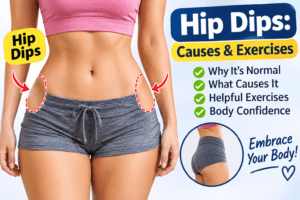
Yes. These indentations are a normal anatomical feature.
They are not automatically associated with poor health, unhealthy weight, nutritional deficiencies, or a lack of physical activity.
People sometimes compare their bodies with fitness models, celebrities, or edited photographs. This can create unrealistic expectations about how the outer hip area should look.
In reality, there is no single ideal body shape.
Some individuals have prominent curves, others have straighter silhouettes, and many fall somewhere between these two appearances.
A person’s overall well-being cannot be determined by the shape of this particular area.
Can Exercise Reduce Their Appearance?
Exercise can strengthen the surrounding muscles and influence overall body composition. However, it cannot completely eliminate an indentation caused by skeletal structure.
For people interested in developing their gluteal muscles, a consistent resistance-training program may help improve strength, stability, and muscular development.
The following exercises are commonly used to train the muscles around the hips and buttocks.
1. Side-Lying Leg Raises
This movement primarily targets the gluteus medius and other muscles responsible for moving the leg away from the body’s midline.
How to perform it:
Lie on one side with your legs extended.
Keep your hips stacked and your upper body supported.
Slowly lift your upper leg while keeping your toes facing forward.
Pause briefly at the top.
Lower your leg with control.
Complete 10–15 repetitions before switching sides.
Avoid rotating your pelvis backward or using momentum.
2. Banded Lateral Walks
Resistance bands provide additional tension during side-to-side movements.
How to perform it:
Place a resistance band around your thighs or ankles.
Stand with your feet approximately shoulder-width apart.
Bend your knees slightly.
Take a controlled step to one side.
Bring the opposite foot toward the first without allowing the band to become completely loose.
Continue for several steps before changing direction.
This movement helps develop hip stability and strengthen the outer gluteal muscles.
3. Hip Thrusts
Hip thrusts are commonly included in lower-body strength programs because they emphasize the gluteus maximus.
How to perform it:
Sit on the floor with your upper back against a stable bench.
Bend your knees and position your feet flat on the ground.
Push through your feet to lift your hips.
Squeeze your gluteal muscles at the top.
Lower your hips slowly.
Repeat for 10–12 controlled repetitions.
Beginners can start with body weight before introducing additional resistance.
4. Bulgarian Split Squats
This single-leg exercise develops lower-body strength, balance, and coordination.
How to perform it:
Stand in front of a stable bench.
Place one foot behind you on the bench.
Keep your front foot firmly planted.
Bend your front knee and lower your body.
Push through the front foot to return to the starting position.
Complete the desired repetitions on both sides.
Use a comfortable range of motion and maintain proper balance.
5. Clamshell Exercises
Clamshells are a beginner-friendly movement that targets muscles involved in hip stabilization.
How to perform it:
Lie on your side with your knees bent.
Keep your feet together.
Slowly lift the upper knee without rotating your pelvis.
Pause briefly.
Return to the starting position.
Repeat before switching sides.
A resistance band can be added as strength improves.
6. Cable Hip Abductions
This exercise uses a cable machine to provide resistance while moving one leg outward.
How to perform it:
Attach an ankle strap to a low cable pulley.
Stand sideways to the machine.
Hold a stable support if necessary.
Move the working leg outward in a controlled motion.
Pause briefly.
Return slowly without allowing the weight to pull your leg inward.
Choose a manageable resistance and avoid swinging your leg.
A Sample Weekly Lower-Body Workout
People who want to strengthen their gluteal muscles can begin with a manageable routine. The following example is intended for generally healthy adults who are comfortable performing resistance exercises.
| Exercise | Sets | Repetitions |
|---|---|---|
| Hip thrusts | 3 | 10–12 |
| Side-lying leg raises | 2 | 12–15 per side |
| Banded lateral walks | 2 | 10–12 steps each direction |
| Bulgarian split squats | 2 | 8–10 per side |
| Clamshells | 2 | 12–15 per side |
Allow sufficient recovery between training sessions. Beginners may benefit from performing this workout twice weekly rather than training the same muscles every day.
Gradually increase resistance or repetitions as strength improves.
Good technique, consistency, and adequate recovery are more important than performing a large number of repetitions.
Can Nutrition Change This Body Feature?
Nutrition supports muscle development, recovery, and general physical well-being. However, no specific food can selectively fill an indentation along the outer hip.
A balanced eating pattern can help support an effective exercise routine.
Protein
Protein supplies amino acids that the body uses to repair and build muscle tissue.
Common food sources include:
Eggs
Chicken and turkey
Fish
Greek yogurt
Milk
Beans and lentils
Tofu and tempeh
Nuts and seeds
Including a protein source in regular meals can support muscle recovery.
Healthy Fats
Dietary fats play important roles in hormone production, cell function, and nutrient absorption.
Examples include avocados, olive oil, walnuts, almonds, and fatty fish.
Complex Carbohydrates
Carbohydrates provide energy for everyday activities and exercise.
Whole grains, oats, brown rice, potatoes, fruits, and vegetables are useful choices.
Hydration
Adequate fluid intake supports normal body functions and exercise performance.
Water requirements vary depending on activity level, climate, body size, and individual circumstances.
There is no need to follow an extreme diet or gain weight specifically to change the appearance of this region.
Can Weight Loss Make Them More Visible?
Sometimes, changes in body weight can influence how noticeable these curves appear.
When someone loses body fat, the amount of soft tissue around the hips and thighs may decrease. Depending on their natural anatomy, this can make the indentation more visible.
Other people may notice very little difference.
Similarly, gaining weight does not guarantee that the area will become rounder. The body determines where additional fat is stored, and this distribution cannot be precisely controlled through food choices or exercise.
It is important to avoid crash diets, excessive calorie restriction, and unrealistic body-transformation goals.
Can You Completely Get Rid of Them?
There is no exercise or natural treatment that can guarantee complete removal of these indentations.
The main reason is that their appearance is strongly influenced by skeletal structure and the distribution of soft tissue.
Strength training may change muscle development, but it cannot reposition the pelvis or alter inherited bone proportions.
Some cosmetic procedures are marketed as ways to change the outer hip contour. These may include fat transfer or injectable treatments, depending on the provider and jurisdiction.
However, cosmetic interventions carry potential risks, including infection, uneven results, scarring, tissue damage, and complications related to anesthesia or injected materials.
Anyone considering a procedure should consult a qualified, appropriately licensed medical professional and discuss the evidence, risks, alternatives, and realistic expectations.
It is also important to be cautious about unapproved injections, products promoted through social media, and clinics that promise permanent or guaranteed results.
Hip Dips vs. Love Handles: What Is the Difference?
These two terms describe different areas of the body.
Love handles refer to fat deposits around the sides of the waist, usually extending toward the lower back.
The indentations discussed in this article appear lower, around the transition between the pelvis and upper thighs.
Their underlying causes are also different. Love handles are more directly associated with the amount and distribution of body fat, while the outer hip contour is strongly influenced by skeletal anatomy and soft-tissue distribution.
Both are normal variations in body appearance.
Do They Affect Physical Performance?
In most cases, these natural indentations do not interfere with walking, running, lifting, or everyday movement.
The shape of the outer hip does not determine whether someone can develop strong gluteal muscles or participate in athletic activities.
Hip strength and stability depend on several factors, including muscle function, coordination, mobility, and overall conditioning.
Exercises that strengthen the gluteal muscles can support activities such as climbing stairs, running, jumping, and maintaining balance.
If someone experiences persistent pain, weakness, restricted movement, or a sudden change in the appearance of one side, they should seek an appropriate medical evaluation. These symptoms should not automatically be attributed to normal anatomical variation.
Body Image and Social Media Expectations
The popularity of this topic has increased partly because of social media fitness trends.
Photographs and videos often show carefully selected poses, lighting, clothing, and camera angles. Some images are also digitally altered.
As a result, viewers may develop unrealistic expectations about natural body proportions.
It is worth remembering that the appearance of the lower body changes with posture, movement, lighting, and clothing.
A person may look different in workout leggings than in jeans or swimwear. None of these differences determines their physical condition or personal worth.
Instead of focusing entirely on appearance, consider goals such as:
Improving lower-body strength.
Developing better balance and coordination.
Increasing flexibility and mobility.
Building confidence during exercise.
Maintaining sustainable eating habits.
Supporting long-term physical well-being.
These goals provide benefits that extend beyond the appearance of a particular body area.
Clothing Tips for Different Hip Shapes
There is no requirement to hide these natural curves. However, people who want to experiment with different clothing styles can choose garments based on comfort and personal preference.
Some options include:
High-waisted jeans: These can create a defined waistline and provide a comfortable fit around the hips.
Straight-leg pants: Their balanced silhouette may appeal to people who prefer less emphasis on the upper thighs.
Wide-leg trousers: These offer a relaxed fit and create a different visual proportion.
Stretch denim: Flexible fabrics can provide additional comfort around the waist and hips.
A-line skirts: Their shape gradually widens from the waist, creating a flowing silhouette.
Well-fitted leggings: Choosing the correct size and fabric can improve comfort during exercise without requiring a particular body shape.
Ultimately, clothing should fit comfortably and allow natural movement.
When Should You Speak With a Healthcare Professional?
The presence of symmetrical indentations along the outer hips generally does not require medical treatment.
However, a healthcare professional should evaluate symptoms such as:
Persistent hip or pelvic pain.
Sudden swelling around one hip.
New or unexplained changes in body contour.
Difficulty walking or bearing weight.
Significant weakness.
Pain following an injury.
Numbness or tingling in the leg.
A primary care clinician can assess the symptoms and determine whether a referral to an orthopedic specialist, physical therapist, or another professional is appropriate.
Sudden severe pain, inability to bear weight, or symptoms following a significant injury warrant prompt medical attention.
Frequently Asked Questions
1. Are these indentations unhealthy?
No. They are generally a normal anatomical variation and do not indicate that someone is unhealthy or physically unfit.
2. Are they caused by genetics?
Genetics play an important role. Inherited pelvic proportions, muscle attachment points, and fat distribution all contribute to the appearance of the outer hip region.
3. Can workouts fill the indentation?
Strength training can develop the surrounding muscles, particularly the gluteal muscles. However, it cannot guarantee a completely rounded appearance or change the underlying bone structure.
4. Do men have them too?
Yes. Men can have the same anatomical variation. Its visibility differs depending on skeletal structure, muscle development, and soft-tissue distribution.
5. Does losing weight make them disappear?
Not necessarily. Weight loss may make the indentation more noticeable in some people because the amount of fat around the hips and thighs can decrease.
6. Can squats help?
Squats strengthen several lower-body muscles, including the gluteal muscles and quadriceps. They can support overall lower-body development but cannot specifically remove an anatomical indentation.
7. Are they related to hormones?
Hormones influence body composition and fat distribution. However, the presence of these curves alone is not evidence of a hormonal imbalance.
8. Can walking reduce their appearance?
Walking supports cardiovascular fitness and general physical activity. It does not selectively change the shape of the outer hip area.
9. Do they become more noticeable with age?
They may become more or less visible over time as muscle mass, fat distribution, skin elasticity, and body composition change. Individual experiences vary.
10. Is there a perfect hip shape?
No. There is no medically established ideal shape for the hips. Natural differences in body proportions are expected.
Final Thoughts
The appearance of the outer hip region is influenced by several factors, including pelvic anatomy, genetics, muscle development, and fat distribution. These natural indentations are common and generally do not represent a medical problem.
Exercise can help strengthen the gluteal muscles, improve stability, and support overall physical fitness. Balanced nutrition and adequate recovery can further contribute to long-term well-being.
Most importantly, people should not feel pressured to change a normal anatomical feature because of unrealistic beauty standards or online comparisons.
A healthy approach focuses on strength, mobility, confidence, and sustainable habits rather than trying to achieve one specific silhouette.